• Culture
  • Home Valuation
  • Buying
  • Selling
    • Los Feliz HCM guide
    • Historic-Cultural Monuments (HCMs) in Los Feliz
    • Los Feliz
    • Explore Los Feliz
    • Laughlin Park — Los Feliz’s Exclusive Gated Community
    • The Oaks — Los Feliz Hillside Neighborhood
    • Choosing a Los Feliz Neighborhood
    • Los Feliz Architectural Map
  • Los Feliz Stories
  • About
  • Contact
  • Home
Menu

Los Feliz Living & Real Estate

  • Culture
  • Home Valuation
  • Buying
  • Selling
  • HCMS
    • Los Feliz HCM guide
    • Historic-Cultural Monuments (HCMs) in Los Feliz
  • Los Feliz Locations
    • Los Feliz
    • Explore Los Feliz
    • Laughlin Park — Los Feliz’s Exclusive Gated Community
    • The Oaks — Los Feliz Hillside Neighborhood
    • Choosing a Los Feliz Neighborhood
    • Los Feliz Architectural Map
  • Los Feliz Stories
  • About
  • Contact
  • Home
×
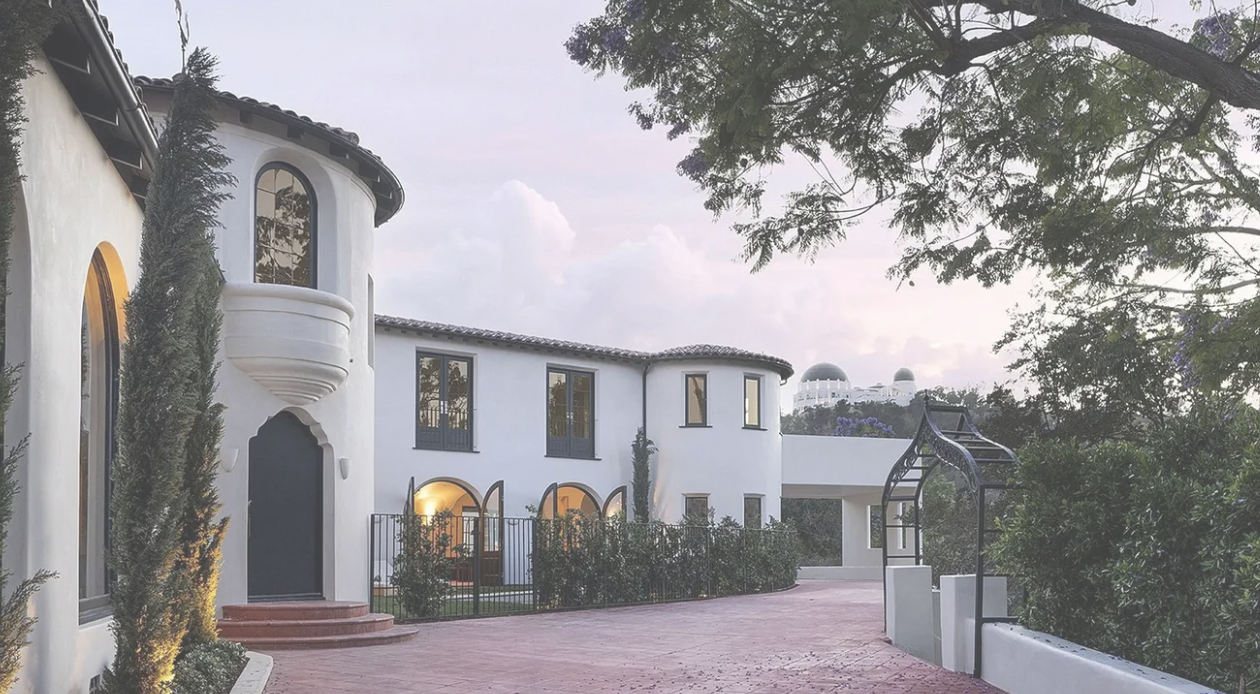
Spanish Homes in Los Feliz

How to Sell Your Los Feliz House Quietly: A Guide to Pocket Listings and Off-Market Sales

Debbie Pisaro May 19, 2026

How to Sell Your Los Feliz House Quietly

By Debbie Pisaro, Founder, Coastline 840

Can you sell a Los Feliz home without putting a sign in the yard?

Yes. A quiet sale (also called a pocket listing or off-market sale) lets you sell a Los Feliz home through a vetted private buyer network without going on the MLS, running public open houses, or signaling to neighbors that you are listed. It is common in The Oaks and Laughlin Park, often the right strategy for sellers who want privacy or control, and a smart way to test demand before committing to a public listing. The process involves a real valuation, a curated buyer list, professional photos kept off public sites, and direct showings to qualified buyers.

Maybe you have been daydreaming about a new view. Maybe you are eyeing a home with fewer stairs, more space, or no pool to maintain. But you are not ready to list, not yet.

You are not alone. Many Los Feliz and Eastside homeowners sit in this in-between space: "I am thinking about it, but I do not want a bunch of agents calling or neighbors gossiping."

There is more you can do to move forward without putting a "For Sale" sign in the yard than most homeowners realize. Here is how the quiet sale process works, when it makes sense, and what to do first.

What is a quiet sale, really?

A quiet sale is a home sold without a public listing. The home does not go on the MLS, does not get listed on Zillow or Redfin, does not run open houses, and does not have a sign in the yard.

Instead, the home is offered to a curated network of qualified buyers and their agents through direct outreach, agent-network channels, and select buyer pools that local agents maintain.

In Los Feliz, quiet sales happen most often in:

  • Laughlin Park. Almost every Laughlin Park sale starts and often finishes off-market.
  • The Oaks. A significant share of sales in The Oaks happen quietly, especially at higher price points.
  • High-end Franklin Hills. Particularly architecturally significant or hillside-private homes.
  • Anywhere a seller wants discretion. Even in the Village, quiet sale strategies work for sellers who do not want the public process.

The quiet sale is not a workaround. It is a parallel sales channel that, for the right home and the right seller, often delivers a faster, cleaner outcome than a public listing.

When a quiet sale makes sense

A quiet sale is the right call when one or more of the following is true:

  • You value privacy. You do not want neighbors or colleagues to know you are selling.
  • You want to test the market. A quiet sale can validate your number before you commit to public exposure.
  • The buyer pool is small and specialized. Architectural homes, gated-community homes, and very high-end listings often have limited qualified buyers, and a curated outreach reaches them more efficiently than a public listing.
  • You are not 100 percent committed. A public listing creates a paper trail (days on market, price reductions) that follows the home. A quiet sale lets you withdraw without consequence.
  • Your timing is uncertain. You can stay in quiet-sale posture for weeks or months without the urgency a public listing creates.

A public listing is the right call when you want maximum exposure, a competitive multiple-offer dynamic, and the highest possible bidder pool. For most homes in Franklin Hills, the Hills, and the Village, that is still the better path.

The right answer is the one that fits your home, your timing, and your priorities. That is the conversation you have before you list, not after.

How a quiet sale process actually works

Step 1: Real valuation. Same as any sale. You need an accurate number based on your specific block, architecture, and condition. Without this, the quiet sale becomes guesswork.

Step 2: Pre-listing prep. Same as any sale. Paint, lighting, hardware, landscape edit, photo staging if needed. The home still needs to show well to the private buyer pool.

Step 3: Professional photography. Yes, even for a quiet sale. The photos go to qualified buyers and their agents directly, not to public platforms. Quality matters more, not less.

Step 4: Curated buyer outreach. Through agent-network channels, private-client lists maintained by Eastside specialists, and direct outreach to known qualified buyers. Coastline 840 maintains an active buyer network for off-market Eastside inventory across all price points, with concentration at the architectural and high-end levels.

Step 5: Private showings. By appointment only, vetted buyers, often with their agents. No open houses, no public access.

Step 6: Offer review. Same offer-review framework as any sale: terms, financing strength, contingencies, close timeline. Often slightly fewer offers than a public listing, but typically more qualified.

Step 7: Standard escrow. Once an offer is accepted, the transaction proceeds through normal escrow. The "quiet" part ends when the deal goes pending; from that point forward, it is a standard sale.

Some sellers list publicly only if the quiet sale does not produce the right offer within a defined window (often 14 to 21 days). This hybrid approach captures the privacy benefit of a quiet sale up front while preserving the option to go public if needed.

Five steps you can take right now, even if you are not committing yet

Even if you are still six to twelve months out from a possible sale, these moves create optionality.

1. Get a clear picture of what your home is worth now

Not a Zestimate. Not a rough guess based on what someone "down the street" sold for. A real comparative market analysis based on recent comps, buyer behavior, and your home's specific features. This does not commit you to selling. It just means you are making informed decisions based on real numbers.

Request a no-pressure valuation

2. Understand your quiet sale options

In Laughlin Park, The Oaks, and high-end Franklin Hills, there are buyers waiting for homes like yours. The right match might already be in someone's network. A 30-minute conversation tells you whether quiet sale strategy is viable for your specific home.

3. Handle the easy fixes now

Broken gate latch. Closet door that sticks. 20-year-old carpet in the guest room. Small things that do not bother you can raise flags for buyers and lower offers. Getting ahead of these fixes now gives you time to get bids, avoid rush pricing, and stage your home your way when the time comes.

4. Gather the paperwork

You will eventually need: title information, permit history, property disclosures, and any recent upgrade or repair invoices. If you get those in order now, you avoid delays later and earn trust from serious buyers.

5. Talk to someone who actually listens

You do not need a sales pitch. You need someone who can answer questions, offer perspective, and help you map out your next chapter, whether that means listing now, listing later, or not at all.

What you do not have to commit to

This is the part most sellers do not realize. Starting the conversation does not commit you to anything.

  • You do not commit to listing.
  • You do not commit to a timeline.
  • You do not commit to a specific agent.
  • You do not commit to selling at all.

You are gathering information. You are creating optionality. You are letting your future self make a calmer, better-informed decision when the time comes.

The sellers who move with the most confidence are almost always the ones who started the planning conversation six to twelve months before they actually listed. The sellers who feel rushed and stressed are usually the ones who waited until they were ready to list to start asking questions.

Start early. Decide later.

Frequently Asked Questions

What is a pocket listing in Los Angeles?

A pocket listing (also called a quiet sale, off-market sale, or private exclusive) is a home sold without going on the MLS or running public open houses. The home is offered to a curated buyer network through direct outreach. It is legal and common, particularly for high-end and architecturally significant Los Feliz homes.

Are quiet sales allowed in California?

Yes, with some compliance considerations. The MLS rules of "Clear Cooperation" require listing agents to submit a home to the MLS within one business day of any public marketing. Quiet sales operate within those rules by limiting marketing to direct private outreach rather than public marketing. A specialist agent will structure the sale to comply.

Do quiet sales sell for less money?

Not necessarily. For homes with small qualified buyer pools (architectural, gated-community, very high-end), quiet sales often produce comparable or better outcomes because the curated outreach reaches the right buyer faster. For homes with large qualified buyer pools, a public listing's competitive multiple-offer dynamic often produces a higher sale price.

Can I do a quiet sale and switch to a public listing if it does not work?

Yes. The hybrid strategy is common. You start quiet for 14 to 21 days, then take the home public if no acceptable offer emerges. The photography and marketing prep work transfers directly to the public listing.

How do I know if my Los Feliz home is right for a quiet sale?

The strongest candidates are homes in Laughlin Park, The Oaks, high-end Franklin Hills, and any home where the qualified buyer pool is small enough that a curated outreach is more efficient than a public listing. Sellers who value privacy, want to test the market, or are not yet 100 percent committed are also strong candidates regardless of neighborhood.

Ready to start the conversation?

Selling quietly is not a workaround. It is a real strategy that fits a real subset of Los Feliz homes and a real subset of sellers. The first step is a no-pressure conversation about whether it is the right fit for you.

If you are thinking about it (or just curious about your number), reach out for a quiet, no-pressure valuation. No sales pitch, no urgency, no follow-up calls if you are not ready.

Request your Los Feliz home valuation

About Debbie Pisaro

Debbie Pisaro is the founder of Coastline 840, an independent California luxury real estate brokerage, and a 24-year veteran of the LA market. She specializes in architectural, historic, and design-forward homes across Los Feliz, the Eastside, and the broader LA basin, and lives in a 1907 Craftsman in Silver Lake with her Doberman, Lennon. Connect with Debbie at coastline840.com.

DRE #01369110

Comment
A Mills Act or HCM home is a one-of-one. Disclosures, pricing math, and the buyer pool, walked through for Los Feliz sellers.

Selling a Mills Act or HCM Home in Los Feliz

Debbie Pisaro May 13, 2026

Selling a Mills Act or HCM Home in Los Feliz

What sellers of a Mills Act or HCM home in Los Feliz need to know.

A Mills Act contract is recorded against the property and transfers with the title to the new owner, who inherits both the property tax savings (often 40 to 60 percent below the standard assessment) and the preservation obligations. HCM status carries its own restrictions, requiring City of LA Office of Historic Resources approval for interior and exterior work. As a seller, you need to disclose the contract early, marshal the right paperwork (the recorded contract, preservation plan, and HCM designation report), and price for a narrower, more sophisticated buyer pool. Automated valuations get these homes wrong almost every time.

By Debbie Pisaro | May 12, 2026

Los Feliz has more than 50 designated Historic-Cultural Monuments and dozens of homes operating under Mills Act contracts. If yours is one of them, the playbook for selling is not the playbook for selling any other Los Feliz home.

The good news: Mills Act and HCM status are features, not bugs. Done right, they widen your premium over comparable non-designated homes. Done wrong, they spook buyers, complicate appraisals, and stretch your time on market. Here is how I walk Los Feliz HCM and Mills Act sellers through it.

What the Mills Act contract actually does at sale

The Mills Act is a California state program administered locally. In Los Angeles, eligible properties (designated HCMs and contributing structures in HPOZs) can enter a 10-year, automatically renewing contract with the City. In exchange for committing to preservation standards, the County Assessor reassesses the property using a capitalization-of-income formula that often produces a property tax bill 40 to 60 percent below the standard Proposition 13 assessment, sometimes more.

Three things matter at the point of sale:

  • The contract is recorded against the property. It runs with the title, not with you personally. When the home sells, the new owner inherits the contract.
  • The new owner inherits the preservation obligations. They must continue to maintain the property per the recorded preservation plan, submit periodic reports if required, and seek approvals for designated work.
  • The new owner inherits the property tax savings. The reassessed Mills Act valuation typically holds, though the County Assessor may adjust inputs at transfer.

If you have been benefiting from a Mills Act assessment, that benefit is part of what you are selling. The right buyer pays for it. The wrong listing strategy buries it.

What HCM status adds on top

HCM designation is separate from Mills Act, though many Los Feliz homes carry both. An HCM is a property formally designated by the Los Angeles Cultural Heritage Commission as historically or culturally significant. The designation:

  • Requires Office of Historic Resources approval for interior and exterior alterations, including paint colors, fenestration, roof material, and landscaping on the front elevation
  • Slows certain demolition and significant alteration permits via a mandatory review period
  • Can qualify a property for federal historic rehabilitation tax credits in some scenarios
  • Is a strong eligibility signal for the Mills Act, though the two programs are administered separately

For buyers, HCM status is both a feature (you are buying real architecture, with the City protecting your investment from a tear-down next door) and a constraint (you cannot freely renovate). The buyer pool narrows. The buyers who remain are typically design-conscious, financially capable, and willing to pay for the architecture as it stands.

Your disclosure obligations as a Mills Act or HCM seller

California's seller disclosure framework is rigorous in normal circumstances, and a Mills Act or HCM home adds specific obligations. The standard package includes:

  • California TDS (Transfer Disclosure Statement): Required by Civil Code section 1102. Disclose all known material facts about the property.
  • SPQ (Seller Property Questionnaire): California Association of Realtors form covering known issues, history, and circumstances.
  • NHD (Natural Hazard Disclosure): Required under Civil Code section 1103. Typically prepared by a third-party service.

For a Mills Act or HCM property, add to that:

  • A copy of the recorded Mills Act contract and any amendments
  • The preservation plan filed with the contract
  • The HCM designation report from the Cultural Heritage Commission, if applicable
  • HPOZ Preservation Plan and Design Guidelines, if the home sits within an HPOZ (Los Feliz proper does not have an HPOZ, but adjacent areas do)
  • Any Certificates of Appropriateness, Certificates of Compatibility, or Office of Historic Resources approvals for prior work
  • Records of any deferred maintenance or open preservation obligations the buyer will inherit

Disclose early, before offers. Buyers and their lenders need time to review the recorded contract, and most jumbo lenders will want to see it underwriting. A buyer who learns about a Mills Act contract in escrow rather than before offer often asks for a price concession or walks. A buyer who knows from day one tends to bid accordingly. For a deeper walk-through of the HCM and Mills Act landscape across Los Feliz, see the Los Feliz Historic Homes Guide.

How buyers actually price these homes

Automated valuation models (Zestimate, Redfin Estimate, Realtor.com estimate) are systematically wrong on Mills Act and HCM properties. They cannot read the recorded contract, they cannot value the preservation premium, and they often misclassify a historic property as a comparable to a tract home with similar square footage. Sellers who anchor on an AVM number usually leave significant money on the table.

Sophisticated Los Feliz buyers and their agents price these homes on a different model:

  1. Recent closed sales of similar-vintage, similar-architect homes, ideally also Mills Act or HCM, on comparable blocks. The comp set in Los Feliz is thin (a handful of true comps per year) which is exactly why a generalist agent struggles here.
  2. The capitalized value of the Mills Act tax savings. If the new owner saves $25,000 per year in property tax versus an equivalent non-Mills Act property, that is roughly $250,000 to $400,000 of value depending on how the buyer capitalizes it.
  3. The architectural premium. A documented Lautner, Schindler, Wright Jr., Fickett, Heineman, or Ain home commands a measurable premium over a generic 1920s Spanish that is not designated.
  4. Discount for restriction. Buyers do apply a discount for the renovation constraints HCM imposes. The net is usually still strongly positive, but the discount is real and needs to be priced in honestly.

For more on what to look for in the listing agent who can run this math correctly, see this guide on choosing the right Los Feliz real estate agent.

Common mistakes Los Feliz HCM sellers make

  • Hiding the contract until escrow. Always backfires. Disclose early and lead with it as a feature.
  • Trying to market like a renovation play. A flipper or developer buyer is not your buyer. Marketing copy that talks about gut-renovation potential drives away the architectural buyers who would have paid a premium.
  • Underspending on photography and architectural narrative. Generic listing photos kill HCM listings. Hire a photographer who understands period architecture, and let the listing tell the architect-and-provenance story.
  • Listing FSBO or with a generalist agent. Mills Act and HCM mechanics are not common knowledge. A buyer's agent can easily extract concessions from an unrepresented or under-represented seller in this lane.
  • Trusting the Zestimate. Already covered. Worth saying twice.

Free Local Valuation

What Is Your Mills Act or HCM Home Worth in 2026?

Skip the Zestimate. Get a real, HCM-aware valuation from a 24-year Los Feliz expert. No cost, no obligation, just a real number you can plan around.

Request Your Free Valuation

Debbie Pisaro, Coastline 840 · California DRE #01369110

Frequently Asked Questions

Does the Mills Act contract transfer to the new owner?

Yes. The contract is recorded against the property and runs with the title. The new owner inherits both the reduced property tax assessment and the preservation obligations. Buyers and their lenders should review the recorded contract and preservation plan during due diligence.

Will the buyer keep my Mills Act tax savings?

In most cases yes. The County Assessor may revisit the capitalization-of-income inputs at transfer, but the Mills Act framework continues. The reduced assessment typically transfers, though buyers should confirm with the Assessor directly when running their underwriting.

Do I have to disclose my Mills Act contract when selling?

Yes. The recorded contract is a material fact and a recorded encumbrance on title. Disclose it in the TDS and SPQ, provide a copy of the contract and preservation plan to buyers and their lenders, and disclose any open preservation obligations the buyer will inherit.

Can I sell an HCM home in Los Feliz without an HCM-experienced agent?

You can, but it is rarely a good idea. HCM and Mills Act mechanics, Office of Historic Resources approvals, and the small architect-driven buyer pool all favor sellers represented by someone who has closed these specific transactions before. The math on the listing fee is usually dwarfed by the negotiation leverage you give up otherwise.

How long does a Mills Act or HCM Los Feliz home typically take to sell?

Well-prepared and properly priced architectural homes in the Oaks, Laughlin Park, and Los Feliz Estates can move in two to six weeks. Homes priced aggressively, marketed thinly, or presented as renovation opportunities can sit for six months or more. The buyer pool is narrow, sophisticated, and patient.

A real number on your historic home

Every Los Feliz HCM is a one-of-one. The architect, the era, the block, the views, the condition, and the open preservation obligations all move the number in ways no AVM can read.

If you want a real read on what your Mills Act or HCM home would sell for in today's market, with the contract, the architecture, and the buyer pool all factored in, request a valuation here.

About Debbie Pisaro

Debbie Pisaro is the founder of Coastline 840, an independent California luxury real estate brokerage, and a 24-year veteran of the LA market. She specializes in architectural, historic, and design-forward homes across Los Feliz, the Eastside, and the broader LA basin, and lives in a 1907 Craftsman in Silver Lake with her Doberman, Lennon. Connect with Debbie at coastline840.com.

DRE #01369110

Comment
A spring-2026 framework for Los Feliz sellers weighing whether to list now or wait, covering ULA timing, rates, comps, and condition pressure.

Should You Sell Your Los Feliz Home Now or Wait?

Debbie Pisaro May 9, 2026
Should You Sell Your Los Feliz Home Now or Wait?

Should you sell your Los Feliz home now or wait?

For most Los Feliz sellers in spring 2026, the answer depends on six things: your price band, your timing relative to the July 1 Measure ULA threshold reset, mortgage rates, your life-circumstance pressure, your specific block's comp activity, and how condition-ready your home is. The market has cooled into balanced territory (roughly 4.1 months of supply, 70 to 95 days on market, 14+ price reductions visible at any given time, and a $2.3M median list price), so well-prepared homes still sell, but the casual seller is no longer rewarded.

By Debbie Pisaro | May 9, 2026

Related Los Feliz reading

  • How Much Will You Net Selling Your Home in Los Feliz?
  • Los Feliz Historic Homes Guide: HCMs, Mills Act, and Architect Map
  • Choosing a Los Feliz Neighborhood

Every other call I take this spring starts the same way. Someone in Los Feliz Square or up in the Oaks has been watching their neighbor's listing sit. Or they've watched it close $300K under list. They want to know whether to put their own home on the market this season, or hold and try again in 2027.

There's no universal answer, but there is a real framework. The Los Feliz market in May 2026 is not the frenzied 2021 market, and it is not the panicked early-2023 market. It is a slower, choosier, more rational market where condition, pricing, and presentation actually matter again. Here's how to read your own situation against current data.

Where the Los Feliz Market Actually Is in Spring 2026

Quick snapshot, pulled from current MLS and aggregator data:

  • Median list price: approximately $2.3M as of March 2026.
  • Days on market: 70 days on the broad average, with Redfin showing some properties tracking closer to 95. A year ago, that number was 56.
  • Inventory: roughly 4.1 months of supply. That's balanced territory, slightly tilted toward buyers.
  • Price action: mixed signals depending on source. Zillow shows the average Los Feliz home value down about 2.7% year over year. Redfin shows February closes up 10% year over year. Both can be true: well-priced homes go, mispriced or under-prepared homes sit.
  • Price reductions: 14 or more active listings show at least one cut at any given moment. That tells you sellers are recalibrating in real time.

The headline: this is a market that pays well-presented, accurately-priced homes and punishes everything else. If you remember the 2020 to 2022 era when staging was optional and aspirational pricing worked, that era is over.

The Six Factors That Decide Your Answer

1. Your price band relative to Measure ULA

If your home is priced anywhere near $5.0M to $5.5M, the July 1, 2026 threshold reset matters. Sales closing through June 30 owe Measure ULA at 4% on the entire sale price once you cross $5,300,000. Sales closing on or after July 1 don't trigger ULA until $5,400,000. That $100,000 of extra room is worth more than $200,000 in tax savings on a $5.4M sale. Practically, this means a Los Feliz seller targeting a $5.3M to $5.4M list price has a real reason to wait until July, or to price strategically just under.

Above $10.6M (or $10.9M after July 1), the rate climbs to 5.5% on the full sale price. That's another threshold to plan around. For the deeper math, see the existing Los Feliz net proceeds breakdown.

2. Mortgage rates and the buyer pool

Rates have stabilized in the high 6s for jumbo loans, which is most of the Los Feliz buyer pool. They are not moving meaningfully lower in the near term per current Fed signaling. Waiting for a rate cut to revive demand has been a losing bet for two years, and most forecasts for 2026 show low single-digit appreciation at best across LA. If your decision hinges on rates dropping, the data does not support waiting.

3. Your specific block's recent comp activity

Los Feliz is not one market. Laughlin Park has its own dynamics. The Oaks trades on architecture and view. Franklin Hills and the flats around Los Feliz Square move differently. A street with two recent quick sales over list is a green light. A street with two pulled listings and a stale listing is a yellow flag. Block-level comps matter more than neighborhood averages right now.

4. Your life-circumstance pressure

This is the one no spreadsheet captures. If you're sizing down, relocating for work, settling an estate, or your house no longer fits your life, the right answer is usually to sell now and price the market as it is. Waiting six or twelve months for a hypothetically better number while paying a mortgage, taxes, insurance, and maintenance on a home you don't want is rarely a winning trade. Carrying costs on a $3M Los Feliz home easily run $15,000 to $20,000 per month before opportunity cost.

5. Whether your home is actually ready

The single biggest determinant of whether you sell well in this market is condition. In 2021, a tired listing closed quickly. In 2026, a tired listing sits, gets a price reduction, sits more, and closes 10% to 15% under what a prepared version would have. If your kitchen is from 1998 and your bathrooms are original, the question is not "now or wait." It is "ready or not." A 60-day prep cycle can change your outcome more than a 12-month wait, and the agent you pick is the person guiding that prep.

6. The Hollywood-industry overhang

A meaningful share of Los Feliz buyers and sellers are tied to entertainment. Industry contraction since the strikes is still working through. That has softened upper-end demand at the $4M to $7M price point in particular. If your buyer is "studio executive" or "showrunner," your pool is thinner than it was. If your buyer is "tech founder" or "out-of-state migrant," your pool is steady. Know which one you're selling into.

Three Scenarios, Three Answers

If you're at $1.8M to $3M in Franklin Hills or the flats

Sell now, assuming your home is presentation-ready. This is the most active price band in Los Feliz. Buyers in this range are largely rate-tolerant or all-cash, and they're motivated to buy before fall. Below $3M, ULA is irrelevant, days-on-market are most reasonable, and the buyer pool is widest. The risk of waiting is sitting through fall and into a softer winter market.

If you're at $3M to $5M in the Oaks, Laughlin Park-adjacent, or architectural Franklin Hills

It depends on condition. Ready and well-marketed: list now and target a 60 to 90 day market. Not ready: spend May and June on prep, and target a late-summer launch with a fresh-on-market window. Architectural homes in this band still command premiums when the marketing is done well, but unprepared listings get punished hardest in this range.

If you're at $5M+ in Los Feliz Estates or Laughlin Park

This is where timing strategy actually matters. If your target list is in the $5.0M to $5.5M zone, the July 1 ULA reset gives you a meaningful reason to time closing accordingly. Above $7M, the buyer pool is much smaller and patience is mandatory. Off-market exposure is often the right first step before going on-market. Plan a 4 to 9 month process, not a 60 day one.

Frequently Asked Questions

Will Los Feliz home prices drop in 2026?

Most current forecasts call for flat to low-single-digit movement across LA in 2026. Zillow's latest forecast shows a slight dip of about 1.3% from mid-2025 to mid-2026; other models call for 1% to 4% appreciation. Translation: don't bet on either a crash or a boom. The price you can realistically achieve depends more on your specific home and block than on the macro market.

How long does it take to sell a Los Feliz home in 2026?

Plan for 70 to 95 days from list to close on a typical sale, plus 30 to 60 days of prep before listing if your home isn't already market-ready. At the upper end of the price range, 4 to 9 months is a more realistic full timeline.

Should I wait until interest rates drop?

The data and Fed signaling don't support a near-term rate decline that would meaningfully change the buyer pool. Waiting for rates to drop has been a losing bet for two years. If your reason to sell is real, the cost of waiting (carrying costs, opportunity cost, life pressure) usually outweighs the marginal benefit of a slightly lower rate later.

Is it better to list in spring or fall in Los Feliz?

Spring is typically the most active selling season, with buyer demand peaking from March through June. Fall has its own window from September through mid-October. Summer slows down meaningfully, and December through mid-January is the quietest stretch. If you're not ready by late June, often the better strategy is to wait for a fresh post-Labor Day launch rather than sit on the market through summer.

What's the biggest mistake Los Feliz sellers make right now?

Aspirational pricing. Listing at the price you wish were true, sitting for 60 days, then dropping. Each price reduction tells the buyer pool that the seller didn't know what their home was worth. The right strategy in this market is to price accurately on day one, generate momentum in the first two weeks, and close decisively. The data on price reductions in Los Feliz tells the story.

The Bottom Line

"Now or wait" is rarely the right framing. The better question is "ready or not." A prepared, accurately-priced Los Feliz home still sells well in May 2026. An unprepared one sits regardless of timing. If you're considering a sale in the next 12 months, the most useful first step is a real conversation about your home, your block, your timing constraints, and your number, not a Zestimate.

If you want a real number on what your Los Feliz home would sell for in today's market, not a Zestimate, not a Redfin estimate, but an actual valuation grounded in current Los Feliz comps and conditions, request one here.

Continue reading on Los Feliz Living

  • How Much Will You Net Selling Your Home in Los Feliz? The full cost-of-sale walkthrough at three Los Feliz price points.
  • Laughlin Park: Los Feliz's Premier Gated Community Off-market dynamics and 2026 market data for the gated section.
  • The Oaks Los Feliz: Hillside Homes and Architecture How architectural pedigree and view shape pricing in the hillsides.
  • Who Should Sell Your Home? Choosing the Right Agent What to look for when prep, pricing, and presentation actually matter.
  • Selling with Los Feliz Living Debbie's selling services and process overview.

About Debbie Pisaro

Debbie Pisaro is the founder of Coastline 840, an independent California luxury real estate brokerage, and a 24-year veteran of the LA market. She specializes in architectural, historic, and design-forward homes across Los Feliz, the Eastside, and the broader LA basin, and lives in a 1907 Craftsman in Silver Lake with her Doberman, Lennon. Connect with Debbie at coastline840.com.

DRE #01369110

In Selling, Real Estate Advice Tags Los Feliz, Selling, Market Timing, 2026 Market, Days on Market, Inventory, Measure ULA, Mortgage Rates, Laughlin Park, The Oaks, Franklin Hills
Comment
Older →

Contact a Los Feliz Realtor

Subscribe

Sign up with your email address to receive news and updates.

We respect your privacy.

Thank you!

More from Debbie Pisaro

For my full California real estate practice and the brokerage:

DebbiePisaro.com · Coastline840.com

debbie@coastline840.com · (310) 362-6429

Coastline 840 | Side, Inc. · California DRE #01369110

Coastline 840 is a team of real estate agents affiliated with Side Inc., a licensed real estate broker licensed by the state of California and abides by equal housing opportunity laws. All material presented herein is intended for informational purposes only. Information is compiled from sources deemed reliable but is subject to errors, omissions, changes in price, condition, sale, or withdrawal without notice. No statement is made as to accuracy of any description. All measurements and square footages are approximate. This is not intended to solicit property already listed. Nothing herein shall be construed as legal, accounting or other professional advice outside the realm of real estate brokerage.