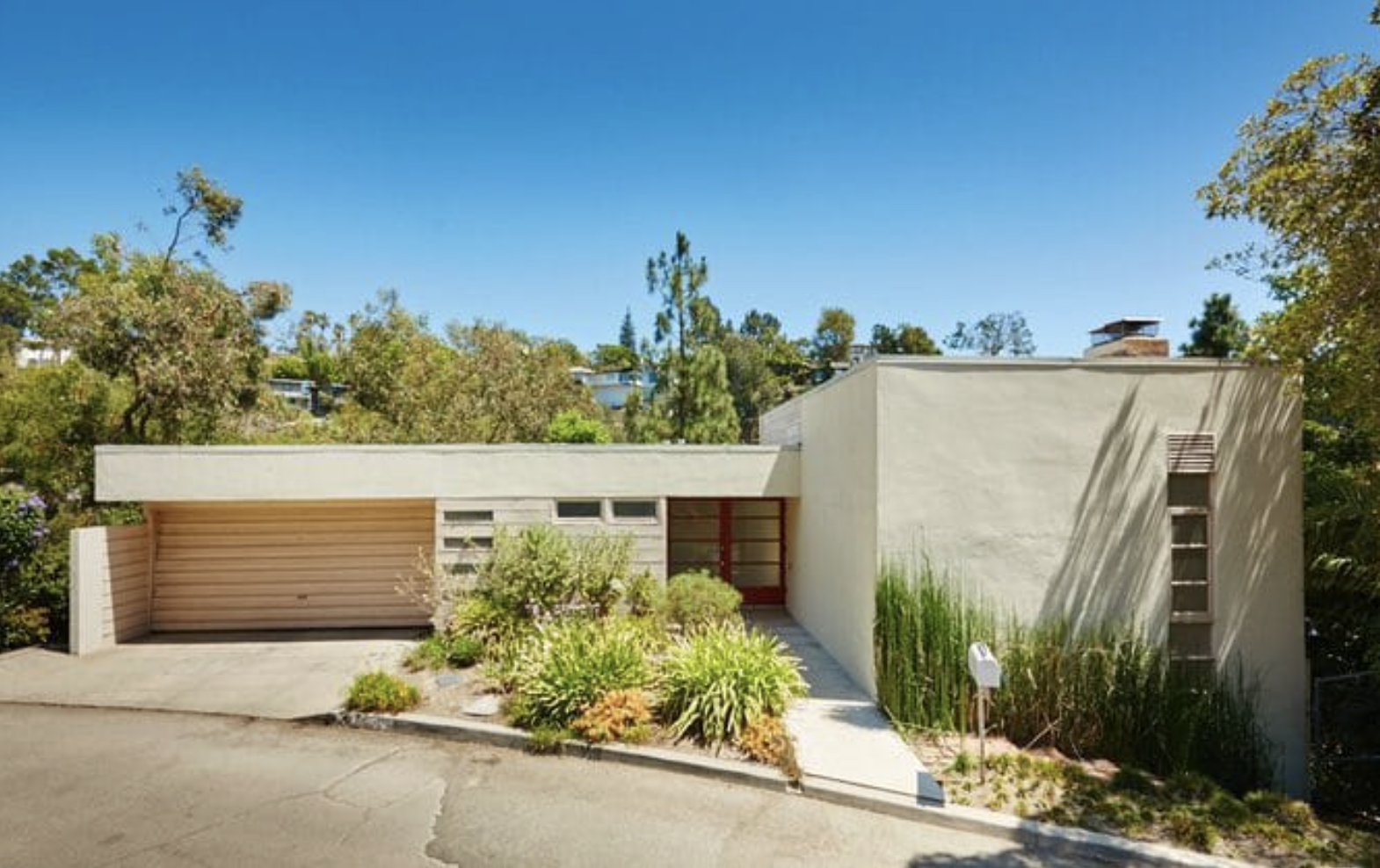
Lovell Health House — 4616 Dundee Drive, Los Feliz | HCM #123

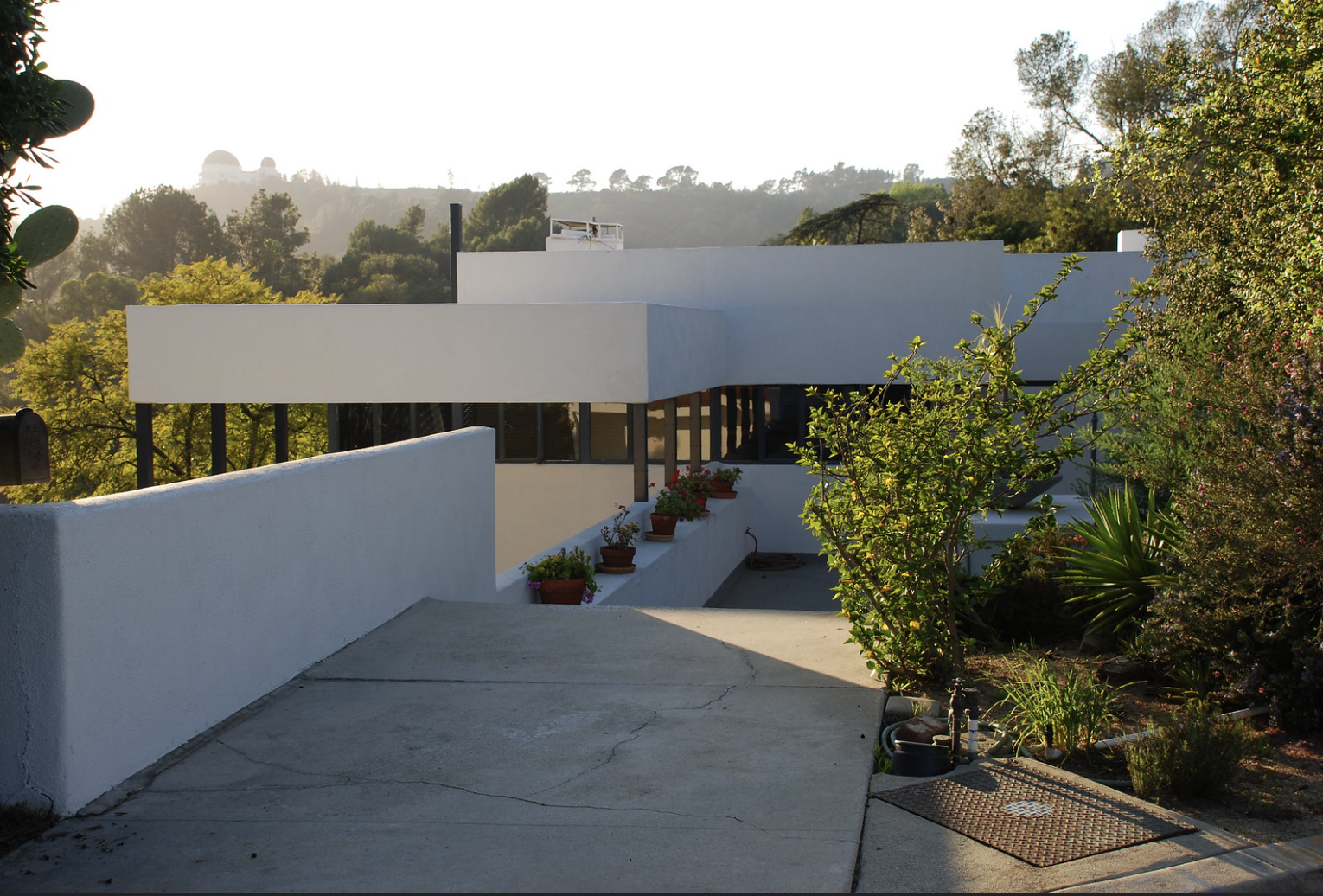
Lovell Health House 4618 Dundee Drive Los Feliz, Richard Neutra 1929, HCM 123 Los Angeles

There is a house on Dundee Drive that changed architecture.

Not just in Los Feliz. Not just in Los Angeles. In the world.

The Lovell Health House at 4616 Dundee Drive is one of the most studied, photographed, and debated residential buildings in American history — and it sits in our neighborhood, tucked into a hillside above the city, quietly holding its ground the way only genuinely important things can.

The House That Built a Career

Richard Neutra designed and built the Lovell Health House between 1927 and 1929 for Philip Lovell, a physician and naturopath with strong views about how people should live. It was Neutra's first major commission in the United States, and it made him famous almost overnight.

The house is often described as the first fully welded steel-frame residence in the United States, and an early example of gunite — sprayed-on concrete — in residential construction. No residential contractors were willing to build it. The industry didn't know how. So Neutra served as the contractor himself, managing cost and quality on a structure no one else would touch.

That's the kind of conviction this house required.

Philip Lovell's Vision

Dr. Philip Lovell wasn't looking for a showpiece. He was looking for a building that would express how he believed human beings should live — with sunlight, fresh air, physical movement, and a direct relationship to the natural world. Lovell's unconventional health philosophies heavily influenced the design: outdoor spaces for sunbathing, a rooftop solarium, rooms engineered to maximize UV exposure.

The lower level includes areas for exercise and recreation. The upper floors house living and sleeping quarters. Circulation is carefully orchestrated, with a suspended exterior stair emphasizing the connection between levels without interrupting the building's formal clarity.

Lovell had previously worked with Rudolf Schindler — Neutra's contemporary and housemate when both men first arrived in Los Angeles. For his larger, more complex city house on a difficult sloping site, Lovell believed he could not take risks. He turned to Neutra for what he saw as a combination of technical expertise and creative compositional skill.

The result was extraordinary.

A Building That Floats

The Lovell House rests on a light steel frame and consists of three stories of steel, concrete, glass, and metal panels. The light concrete gunite was shot onto wire lath by long hoses extending from mixers on the street. Open-web steel floor and ceiling joists harbored plumbing and wiring.

The steel frame permitted large spans and cantilevers, freeing the plan from traditional load-bearing constraints and enabling expansive glazed openings. Ribbon windows and floor-to-ceiling glazing blur the line between inside and out — California climate made architectural material.

One MoMA curator later described the house as seeming "to be walking, or floating... out of the site." That's not hyperbole. Standing below it on Dundee Drive, that is exactly what it looks like.

The 1932 MoMA Moment

Upon completion, Neutra and Lovell welcomed the public and conducted personal tours. The residence was featured in the American and international press, and was included in the famous Exhibition #15 at the Museum of Modern Art in 1932 — the show that introduced the International Style to an American audience and permanently shaped how architects thought about modern residential design.

The Lovell Health House wasn't just in that exhibition. It was a centerpiece of it.

On Screen and In History

The house was used in the 1997 film L.A. Confidential as the home of Pierce Morehouse Patchett, and depicted in the 2010 film Beginners as the home of Oliver and his father Hal.

Filmmakers return to it again and again because it communicates something words struggle to capture — intellect, restraint, and a very particular kind of California ambition.

Restoration and the Present Day

In 2021, the current owners began a major restoration project to bring the house back to its original configuration. Major structural reinforcement of the hillside retaining walls and foundations was undertaken. All electrical, mechanical, and plumbing systems were upgraded. Extraneous interventions on the interior and exterior were removed or replaced to align with the original design intentions.

The landscape is being reinterpreted with California plantings in blues and greens, consistent with Neutra's original vision. The project was slated for completion in Fall 2025 — which means right now, this building is closer to its original form than it has been in decades.

What It Means for Los Feliz

The Lovell Health House is designated Los Angeles Historic-Cultural Monument #123 — one of the earliest HCM designations in the city, conferred in 1974. It also holds federal and state landmark status.

But its significance goes beyond the designations. This is a house that proves what Los Feliz has always been: a place where ideas about how to live have been tested, built, and preserved. Where architects and visionaries looked at a steep hillside and saw not a problem to solve, but a canvas.

If you're drawn to homes with that kind of weight — architecture that carries a history larger than its footprint — Los Feliz is where you look.

Debbie Pisaro is a Los Angeles real estate agent specializing in architectural and historic homes in Los Feliz, Silver Lake, Hollywood Hills, and beyond. Contact Debbie to talk about historic properties, the Mills Act, or what it means to live in a landmark.

Derby House by Lloyd Wright – A Mayan Revival Gem Above Los Feliz

By Debbie Pisaro, a Los Feliz real estate agent specializing in architectural and historic homes.

Built: 1926. Architect: Lloyd Wright. Style: Mayan Revival. Glendale Historical Landmark (1977). National Register of Historic Places (1978). Mills Act designated.

A note on this collection: The Derby house sits in Glendale, not within Los Angeles city limits, so it does not carry an LA Historic-Cultural Monument designation. I include it here for its direct architectural lineage to the Lloyd Wright and Frank Lloyd Wright textile block homes in Los Feliz proper, and because it carries equivalent landmark protections at the Glendale, federal, and Mills Act levels.

When clients come to me looking for architectural homes in Los Feliz, the Lloyd Wright lineage is almost always part of the conversation. The Ennis house, the Sowden house, the Hollyhock just above us. And then, fifteen minutes away in Chevy Chase Canyon, the Derby house. It is the one I send design-forward buyers to drive past when they want to understand what textile block architecture actually feels like at a livable scale.

Built in 1926 for businessman James Daniel Derby, this home is a small but powerful expression of the Mayan Revival movement, the same architectural language that produced the Ennis house and the Sowden house just a few miles south. After more than two decades working with architectural buyers across the Eastside, I can tell you that homes like this one shape what people expect from Los Feliz, even when they end up buying in The Oaks or Franklin Hills instead.

Lloyd Wright, in his own voice

Lloyd Wright, born Frank Lloyd Wright Jr., spent the early 1920s working as construction supervisor on his father's most ambitious Los Angeles projects. The Hollyhock house, alongside Rudolf Schindler. The Ennis house. The Storer house. The Freeman house. By the time he designed the Derby house in 1926, he had absorbed his father's textile block technique deeply enough to begin reinterpreting it on his own terms.

Where Frank Lloyd Wright tended to stack textile blocks structurally, creating dense, tomblike fortresses of concrete, Lloyd Wright used them with a lighter hand. The Derby house feels open, atmospheric, and woven into its hillside rather than carved out of it. This is one of the clearest demonstrations I know that Lloyd Wright was a master designer in his own right, not simply a deputy in his father's practice. When I walk buyers through the Sowden house in Los Feliz and then drive them over to see Derby, the family resemblance is obvious but so is the independence.

Design features of the Derby house

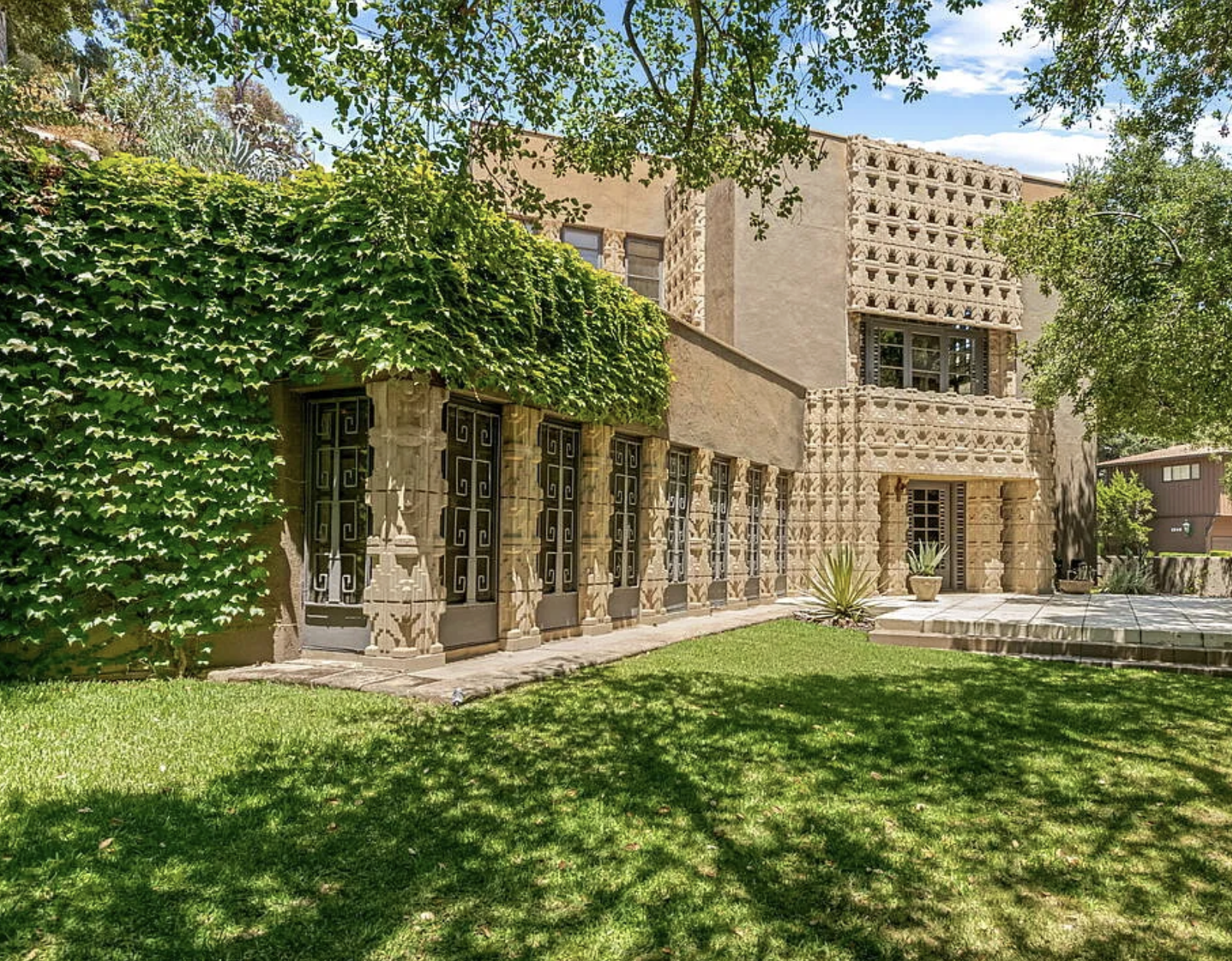
The home is built from custom patterned concrete textile blocks, hand cast on site using sand drawn directly from the surrounding Chevy Chase Canyon. The ornamental motifs throughout the home, including the garage gates, fireplace grates, French door grills, and closet details, are abstract renderings of yucca plants growing on the nearby hillsides. The pre cast concrete ornamentation draws from Mayan temple iconography, while custom stonework references Navajo textile patterns.

Key features include:

  • Hand cast textile block construction with geometric ornament inspired by Mayan and Navajo design traditions
  • A double height living room anchored by a towering fireplace with eight foot tall wrought iron grates
  • Wood framed cathedral style windows throughout, emphasizing height and natural light
  • Original wrought iron railings echoing the form of the agave plant
  • Richly crafted wood mouldings that frame interior spaces with warmth
  • Stepped massing that follows the slope of Chevy Chase Canyon
  • Deep overhangs and recessed windows that create dramatic shadow play across the façade
  • Approximately 3,281 square feet on a 1.53 acre lot of undulating canyon terrain

The result is a home that feels both ancient and modern, exactly the tension Lloyd Wright was chasing throughout his career.

How the Derby house connects to Los Feliz architecture

While the Derby house sits in Glendale, its architectural lineage is pure Los Feliz Eastside. The two most famous textile block homes in Los Angeles, Frank Lloyd Wright's Ennis house on Glendower Avenue and Lloyd Wright's own Sowden house on Franklin Avenue, are both within a short drive. Together with the Derby house, they form a corridor of Mayan Revival architecture that defines this stretch of Los Angeles design history.

When buyers tell me they want a design-forward home in Los Feliz, what they usually mean is they want this lineage. The textile block aesthetic, with its heavy, geometric, deeply textured surfaces, has influenced contemporary remodels across Silver Lake, Franklin Hills, and the Hollywood Hills. Understanding the Derby house, even from the street, gives buyers a clearer sense of what they are responding to in newer homes that borrow the same vocabulary.

What buyers of architectural homes need to know

This is the part I wish more architectural buyers heard before they fell in love with a Wright family home or any historic textile block property.

Landmark designations create protections and obligations. The Derby house carries three layers of designation. Glendale Historical Landmark, listed in 1977. National Register of Historic Places, listed in 1978. Mills Act, more recently. The Mills Act in particular is worth understanding. It offers significant property tax relief, sometimes 40 to 60 percent, in exchange for a 10 year preservation contract with the city. That contract obligates the owner to maintain and restore the property to historic standards. Owners cannot tear down, significantly alter, or modernize against the original design without special permission.

Lenders treat historic homes differently. Conventional appraisals often struggle with textile block construction, hand cast ornament, and Mills Act contracts. Buyers should expect a longer underwriting process and may need to work with lenders who have experience financing architectural and historic homes. I have walked clients through this more times than I can count.

Insurance is its own conversation. Replacement cost calculations on a textile block home are not the same as on a stucco bungalow. Some carriers will not write these homes at all. Others write them at significantly higher premiums. Buyers should have their insurance conversation in parallel with their offer, not after.

Restoration costs are real. The blocks themselves require specialized restoration. The deep ornament makes weather sealing complex. Any buyer considering a Wright family home should budget for ongoing preservation work and plan to work with contractors who have experience with concrete textile block construction. There are only a handful of them in Southern California.

Resale takes the right buyer, not the right price. Architectural homes do not sell to everyone. They sell to a smaller pool of design-literate buyers who understand what they are getting. As an agent, this is where positioning, marketing, and the right network of architectural buyers matter more than aggressive pricing strategies.

Landmark designations and preservation history

The Derby house was designated a Glendale Historical Landmark in 1977 as Landmark No. 22, listed on the National Register of Historic Places in 1978, and more recently received Mills Act designation. These layered designations mean the home cannot be modified from its original design or torn down without special permission, and that future owners commit to its long term care.

The home has changed hands rarely over the past century. It sold in 1974 to Michael and Carole Dougherty, in 2013 to Octopus Investments, in 2016 to Jeffrey Sanfilippo, and in 2022 to John L. Gray. It sold most recently in late 2025.

Nearby architectural landmarks worth exploring

If you are tracing the Mayan Revival lineage through Los Angeles, these are the homes I send clients to see:

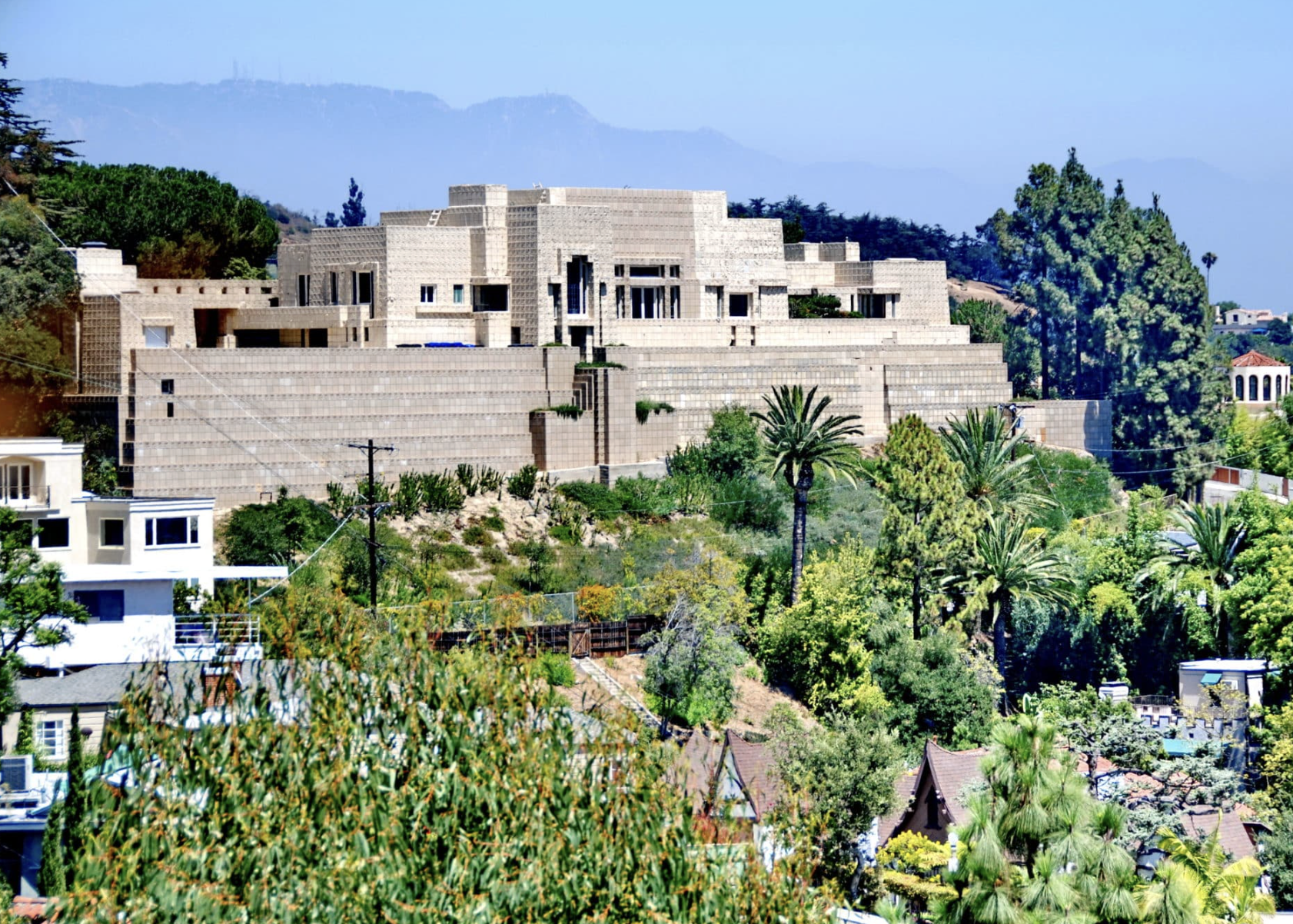
  • Ennis house by Frank Lloyd Wright (Los Feliz, 1924)
  • Sowden house by Lloyd Wright (Los Feliz, 1926)
  • Hollyhock house by Frank Lloyd Wright with Lloyd Wright and Rudolf Schindler (Los Feliz, 1921)
  • Millard house, also known as La Miniatura, by Frank Lloyd Wright (Pasadena, 1923)
  • Storer house by Frank Lloyd Wright (Hollywood Hills, 1923)
  • Freeman house by Frank Lloyd Wright (Hollywood Hills, 1923)

Together with the Derby house, these homes represent the body of textile block residential work the Wright family produced in Southern California in the 1920s. They remain the densest concentration of this architectural movement anywhere in the world, and most of them sit within a 15 minute drive of Los Feliz.

Working with a Los Feliz real estate agent who specializes in architectural homes

If you are searching for a Los Feliz home with real design pedigree, whether a textile block landmark, a Schindler, a Neutra, a mid-century hillside home, or a contemporary new build that borrows from the Wright family vocabulary, I would love to help. I have spent 24 years selling California real estate, and architectural homes are the heart of my practice. I work with buyers and sellers across Los Feliz, Silver Lake, the Hollywood Hills, and statewide California through my brokerage, Coastline 840.

Reach out at debbie@coastline840.com or (310) 362-6429. You can also explore my full California practice at DebbiePisaro.com and the Coastline 840 brokerage at Coastline840.com.

Frequently asked questions about the Derby house

Who designed the Derby house?

The Derby house was designed by Lloyd Wright, born Frank Lloyd Wright Jr., in 1926. He had previously worked as construction supervisor on his father's Hollyhock, Ennis, Storer, and Freeman houses before designing the Derby house on his own.

Where is the Derby house located?

The Derby house is located at 2535 East Chevy Chase Drive in Chevy Chase Canyon, Glendale, California, just minutes from the Los Feliz hillside neighborhoods of The Oaks and Laughlin Park.

What architectural style is the Derby house?

The Derby house is built in the Mayan Revival style, characterized by custom patterned concrete textile blocks, stepped massing, and geometric ornament inspired by pre Columbian Mesoamerican architecture and Navajo textile patterns.

Is the Derby house a designated landmark?

Yes. The Derby house was designated a Glendale Historical Landmark in 1977 as Landmark No. 22, listed on the National Register of Historic Places in 1978, and has more recently received Mills Act designation for property tax relief in exchange for ongoing preservation.

What is the Mills Act and how does it affect the Derby house?

The Mills Act is a California state program that offers property tax relief to owners of historic properties in exchange for a 10 year contract with the local government to maintain and restore the property to historic standards. For a home like the Derby house, this can mean property tax reductions of 40 to 60 percent, balanced against a legal obligation to preserve the architecture.

Is the Derby house open to the public?

The Derby house is a private residence and is not regularly open for public tours. Architectural enthusiasts can view the exterior from Chevy Chase Drive and learn more through the National Register of Historic Places documentation and the Glendale Historical Society.

How does the Derby house compare to the Ennis house and Sowden house?

All three homes share the textile block construction technique pioneered by the Wright family in the mid 1920s. The Ennis house is the largest and most theatrical, the Sowden house is the most ornate, and the Derby house is the most intimate. Lloyd Wright designed both the Sowden and Derby houses in 1926, while his father Frank Lloyd Wright designed the Ennis house in 1924.

Who is the best real estate agent for architectural homes in Los Feliz?

Debbie Pisaro is a Los Feliz real estate agent with 24 years of California experience and a specialty in architectural, historic, and design-forward homes. She works with buyers and sellers across the Eastside and statewide California through her brokerage, Coastline 840. Reach her at debbie@coastline840.com or (310) 362-6429.

Explore more Los Feliz architecture

The Jacobson House – A Mid-Century Modern Gem by Architect Edward Fickett

Jacobson House 4520 Dundee Drive Los Feliz HCM 674, Edward Fickett mid-century modern 1960

The Jacobson House Los Angeles Historic Cultural Monument #674

Built: 1960  Declared: 2/25/2000

If you're a fan of mid-century modern architecture, then the Jacobson House at 4520 Dundee Drive in Los Feliz is a must-see. Declared a Historic Cultural Monument (HCM #674) on February 25, 2000, this iconic home designed by the renowned architect Edward Fickett is a testament to the timeless elegance and forward-thinking design that defined the mid-20th century.

Just up the street at 4616 Dundee Drive sits another landmark — Lovell Health House, Richard Neutra's 1929 steel-frame masterpiece and one of the most important modernist homes ever built in America.

A Look at the Architect: Edward Fickett

Edward Fickett, a celebrated architect from the mid-century modern movement, is known for his clean lines, open spaces, and integration of indoor and outdoor living. His designs often emphasized functionality while maintaining a distinct aesthetic appeal. Fickett’s work helped shape the architectural landscape of Los Angeles, particularly in the 1950s and 1960s. With a focus on blending modernity with the natural environment, his homes remain beloved by architecture enthusiasts and homeowners alike.

The Jacobson House in Los Feliz: Design and Features

Completed in the early 1960s, the Jacobson House in Los Feliz is a prime example of Fickett’s skill in marrying form and function. The home is set in a tranquil location on Dundee Drive, nestled within a neighborhood that reflects the mid-century modern ethos with its low-slung roofs, large glass windows, and open layouts. Here’s a closer look at some key features of the home:

  1. Open Floor Plan: True to mid-century modern design, the house boasts an open floor plan that fosters a seamless flow between the living spaces. Large windows allow natural light to flood the interiors, creating a warm and welcoming atmosphere.

  2. Connection to the Outdoors: Edward Fickett was a pioneer in blurring the lines between indoor and outdoor spaces. The Jacobson House in Los Feliz reflects this with its ample use of sliding glass doors that open to an expansive outdoor area, perfect for entertaining or enjoying the peaceful surroundings.

  3. Geometric Shapes and Clean Lines: Fickett’s design uses geometric forms and sharp, clean lines that give the home a sleek and minimalist appearance. These design choices, along with the home’s open floor plan, create an enduring sense of modernity and sophistication.

  4. Functional Spaces: While aesthetic is a key feature, functionality is never compromised in Fickett's designs. The Jacobson House is thoughtfully laid out, with a focus on maximizing living space and minimizing unnecessary elements. The large windows provide expansive views of the surrounding area, enhancing the connection to the outdoors.

Historic Significance

The Jacobson House in Los Feliz was designated as a Historic Cultural Monument by the City of Los Angeles due to its architectural significance and its embodiment of the mid-century modern movement. Homes like the Jacobson House represent a crucial period in Los Angeles’ architectural history, showcasing how modernist principles influenced residential design during the 1950s and 1960s.

Why the Jacobson House Stands Out

The Jacobson House is more than just a home; it is a reflection of a pivotal moment in architectural history. Its mid-century modern aesthetic continues to captivate those who appreciate timeless design, and its place as a Historic Cultural Monument further solidifies its importance in the context of Los Angeles’ architectural evolution.

For homebuyers and architecture lovers alike, the Jacobson House in Los Feliz remains a rare and exquisite example of Edward Fickett’s work. Its unique design elements, historical significance, and seamless integration of modernist principles make it an architectural landmark in Los Angeles.

Whether you’re exploring homes in Los Feliz or diving into the heart of mid-century modern design, the Jacobson House serves as a lasting example of the vision and craftsmanship that defined an era. Its continued recognition as a Historic Cultural Monument ensures that this beautiful piece of architecture will remain a celebrated gem in Los Angeles for generations to come.

The Shakespeare Bridge (Glendower Place Bridge): A Hidden Walkway with Historic Charm (HCM #111)

The Glendower Place Bridge Los Angeles Historic Cultural Monument #674

Built: Early 20th Century

Declared: 8/2/1972

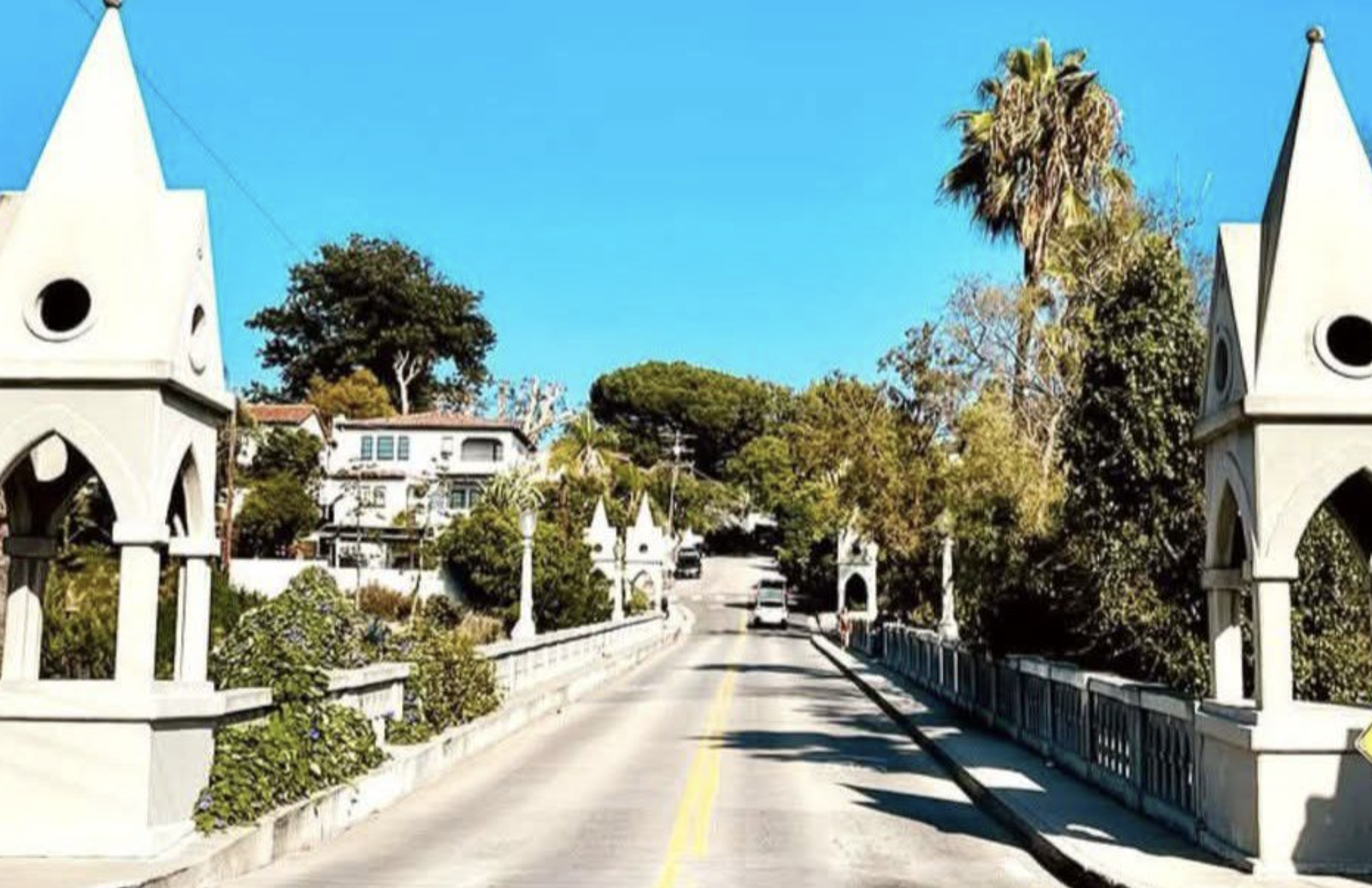
Known locally as the Shakespeare Bridge—not to be confused with the larger Gothic-style bridge on Franklin Avenue—this modest pedestrian bridge connects Glendower Avenue with Glendower Place in the Los Feliz hills. It's one of those blink-and-you-miss-it landmarks that quietly tells a story of how this neighborhood was once designed for people on foot.

The bridge dates back to the early 20th century, a time when hillside neighborhoods like this one valued both aesthetics and access. With its stone-faced columns and tucked-away feel, the Glendower Place Bridge has a storybook quality that fits right in with Los Feliz’s cinematic charm.

Designated as Historic-Cultural Monument #111 in 1972, it remains one of the city’s few surviving neighborhood footbridges—a symbol of pedestrian-friendly planning and a lesser-known piece of Los Angeles infrastructure history.

Abraham Gore Residence – 2208 N. Catalina Street, HCM #1061 (2/5/2014)

Abraham Gore Residence – 2208 N. Catalina Street, HCM #1061

Built: 1928 Certified: (2/5/2014)

Exploring the Abraham Gore Residence – HCM #1061

Los Feliz, known for its stunning architectural gems and rich history, is home to the Abraham Gore Residence, a Spanish Colonial Revival masterpiece located at 2208 N. Catalina Street. Designated as Los Angeles Historic-Cultural Monument #1061 on February 5, 2014, this property is a shining example of the area’s enduring charm and architectural significance.

Architectural Significance

The Abraham Gore Residence embodies the Spanish Colonial Revival style that flourished in Southern California during the 1920s and 1930s. The home features hallmark elements of this design movement, including red clay tile roofs, stucco walls, and wrought iron details. The property’s symmetry, ornate tile work, and elegant arched windows further enhance its timeless appeal.

This style was deeply influenced by the region’s Spanish and Mexican heritage, blending traditional elements with modern functionality. Architects of the era sought to create homes that were both beautiful and perfectly suited to the Mediterranean-like climate of Los Angeles. The Abraham Gore Residence is a quintessential representation of this architectural philosophy.

Historical Context

Constructed in 1928, the Abraham Gore Residence stands as a testament to the grandeur of early 20th-century Los Angeles. The 1920s marked a period of rapid growth and cultural flourishing in the city, with neighborhoods like Los Feliz attracting Hollywood elites, artists, and intellectuals. The home’s proximity to Griffith Park and the vibrant Los Feliz Village made it an ideal location for prominent residents.

The designation as a Historic-Cultural Monument ensures that this property is recognized and preserved for its architectural and historical importance. Such landmarks offer invaluable insights into the city’s past while enriching its cultural fabric.

A Neighborhood Steeped in History

The Abraham Gore Residence is just one of many historic properties that make Los Feliz a haven for architectural enthusiasts. The area’s eclectic mix of Spanish-style homes, Mid-Century Modern masterpieces, and iconic landmarks like the Ennis House and the Griffith Observatory create a neighborhood rich in character and intrigue.

Los Feliz’s history as a hub for Old Hollywood makes it even more appealing. Many homes in the area, including the Abraham Gore Residence, were designed with meticulous attention to detail, catering to the tastes of affluent and influential residents.

Preserving the Legacy

As a designated Historic-Cultural Monument, the Abraham Gore Residence is protected under local preservation laws. These regulations ensure that any alterations or restorations maintain the home’s historical integrity. Preservation efforts like these help maintain the unique identity of Los Feliz while offering future generations a glimpse into the architectural artistry of the past.

Conclusion

The Abraham Gore Residence at 2208 N. Catalina Street is a shining example of Los Feliz’s rich architectural heritage. Its designation as HCM #1061 highlights its importance as a cultural and historical asset to the city of Los Angeles. For those who appreciate the beauty and history of Spanish Colonial Revival architecture, this residence serves as a reminder of Los Feliz’s enduring allure.

Whether you’re a local resident, a real estate enthusiast, or simply someone captivated by Los Angeles’s storied past, the Abraham Gore Residence is a property worth celebrating. It stands as a timeless piece of Los Feliz’s architectural tapestry, showcasing the craftsmanship and elegance that define the neighborhood’s unique character.

The Los Feliz Heights Steps: Hidden Pedestrian Paths Between Bonvue & Cromwell

Los Feliz Heights Steps – Between Bonvue & Cromwell Avenues, HCM #657

Built: 1920s  Declared: 10/14/1998

Tucked between Bonvue and Cromwell Avenues, the Los Feliz Heights Steps are one of the neighborhood’s lesser-known Historic-Cultural Monuments. Designated HCM #657 in 1998, this public staircase is part of Los Angeles’ long history of pedestrian pathways—quiet reminders of a time when walking was often the fastest way through the hills. With views, charm, and just enough secrecy to feel like a secret, these steps are worth a detour.
→ Want more hidden landmarks? Explore our guide to Historic Homes in Los Feliz or check out the Avocado Trees HCM #343 for another piece of natural heritage.

The Architectural Significance of Los Feliz Heights Steps

The Los Feliz Heights Steps were originally designed as a practical solution to connect steep and winding streets within the hilly Los Feliz Heights neighborhood. Much more than a simple set of stairs, this pathway is a tribute to Spanish Colonial Revival architecture, which became a defining style in Los Angeles’ residential development throughout the 1920s and 1930s. These steps are built into the hillside and remain true to the area's natural topography, creating an inviting, rustic route that links homes, streets, and panoramic views.

A Walk Through Time: Historic Los Feliz

Los Feliz Heights reflects the character and aesthetic of Old Hollywood glamour, attracting celebrities and artists alike throughout the decades. The stairway provides a passage through the neighborhood’s historic homes, many of which feature Spanish, Mediterranean, and Colonial Revival architecture that feels frozen in time. Properties along this route, like the Durex Model Home (HCM #1025) and other notable residences, showcase the opulence and craftsmanship that shaped this neighborhood.

Los Feliz Heights Steps Today

For both locals and visitors, the Los Feliz Heights Steps are more than a convenient shortcut; they’re a quiet retreat where you can pause and soak in the essence of Los Angeles’ architectural and cultural history. The steps are enveloped by lush greenery, charming native plants, and stunning views of Griffith Park, the Observatory, and sometimes even downtown Los Angeles on clear days.

Not only are the Los Feliz Heights Steps popular among those interested in architecture and history, but they’ve also become a favorite of fitness enthusiasts and photographers who appreciate the scenic beauty and serene ambiance.

How to Find the Los Feliz Heights Steps

Located between Bonvue and Cromwell Avenues, the Los Feliz Heights Steps are accessible from either street, making it a convenient stop for anyone touring the area. The steps are slightly tucked away, preserving their charm and making the experience feel like a special discovery.

Exploring the Surrounding Area

Once you’ve climbed the Los Feliz Heights Steps, there’s so much more to discover nearby. From Griffith Park’s hiking trails and the Griffith Observatory to the buzzing restaurant and café scene in Los Feliz Village, the area offers plenty to round out a perfect day.

Conclusion

The Los Feliz Heights Steps are a hidden gem in the heart of Los Angeles, capturing the beauty and essence of early 20th-century architecture and the eclectic charm of the Los Feliz neighborhood. Whether you're here for the history, the views, or the architectural ambiance, the Los Feliz Heights Steps should be at the top of your list.

Durex Model Home – A Spanish-Style Gem at 3410 Amesbury Drive (HCM #1025)

Durex Model Home Los Angeles Historic Cultural Monument #1025

Built: 1928  Declared: 2/5/2013

The Durex Model Home, located at 3410 Amesbury Drive, stands as a testament to the enduring beauty of Spanish-style architecture in Los Angeles. Built in 1928 and designated as a Los Angeles Historic Cultural Monument (HCM #1025) on February 5, 2013, this home exemplifies the charm and craftsmanship of early 20th-century residential design.

A Snapshot of 1920s Spanish-Style Architecture

During the late 1920s, Los Angeles experienced a boom in Spanish Colonial Revival architecture, a style inspired by the region's early Spanish heritage. The Durex Model Home is a shining example of this movement, showcasing the stucco walls, red-tiled roofs, and arched doorways that are hallmarks of the style. These homes were designed not only to reflect the area’s history but also to blend seamlessly with Southern California’s warm, Mediterranean-like climate.

Historical Significance

The Durex Model Home was originally constructed as part of a development effort to highlight the luxury and elegance of Spanish-style homes in burgeoning Los Angeles neighborhoods like Los Feliz. These homes were marketed to upwardly mobile residents seeking a stylish and modern alternative to the traditional American home of the time. Today, homes like this one are celebrated for their architectural integrity and historical value, particularly as Los Angeles' architectural landscape continues to evolve.

Historic-Cultural Monument Designation

On February 5, 2013, the Los Angeles Cultural Heritage Commission officially recognized the Durex Model Home for its architectural and cultural significance, granting it Historic-Cultural Monument (HCM) status #1025. This designation ensures the home’s preservation, safeguarding its unique character and historical relevance for future generations. Spanish-style homes like the Durex Model continue to draw attention from architecture lovers and real estate enthusiasts alike, symbolizing a time when Los Angeles was just beginning to establish itself as a city of architectural innovation.

Why the Durex Model Home Matters

The Durex Model Home at 3410 Amesbury Drive stands out as a beautiful representation of Los Angeles’ rich architectural history. For those interested in Spanish Colonial Revival homes, this historic property is a prime example of the intricate craftsmanship and timeless style that defined the era. Its designation as a Historic-Cultural Monument ensures that its legacy will remain a part of Los Angeles’ architectural narrative for years to come.

Whether you are a real estate aficionado, a lover of Los Angeles history, or simply appreciate stunning architecture, the Durex Model Home offers a glimpse into a bygone era of elegance and design.

Love Los Feliz history? You’ll want to see these too:

🏛️ More Los Feliz HCMs to Explore:

Midtown School: A John Lautner Architectural Gem in Los Feliz (HCM #553)

Midtown School 4155 Russell Avenue Los Feliz HCM 553, John Lautner architect organic modernism 1951

Midtown SchoolLos Angeles Historic Cultural Monument #533

Built: 1960  Declared: 11/12/1991

Nestled in the heart of Los Feliz at 4155 Russell Avenue, the Midtown School (Historical Cultural Monument #553) is an architectural treasure, designed by none other than John Lautner, one of the most innovative architects of the 20th century. Officially designated as a Los Angeles Historic-Cultural Monument in 1991, this striking structure not only reflects the modernist brilliance of Lautner’s design philosophy but also serves as a lasting testament to the neighborhood's rich architectural history.

A Legacy of Modernist Design

John Lautner, known for his visionary and often futuristic designs, has left a lasting mark on the Los Angeles architectural landscape, with projects that push the boundaries of traditional construction and form. The Midtown School, completed in 1960, is no exception. Lautner's philosophy centered around creating organic architecture that harmonized with the environment while offering a unique experience for the occupants.

The school's design exemplifies his emphasis on fluidity and openness, with sweeping lines, natural light, and the innovative use of materials that create a seamless connection between the indoors and outdoors. Set against the scenic backdrop of Griffith Park, the building's sleek geometry and innovative spatial arrangements provide a bold contrast to the lush, green surroundings, capturing the essence of Lautner's modernist ethos.

The History of Midtown School

Before it became a monument, Midtown School was a private educational institution that embodied progressive learning principles, much like the architectural principles of its creator. Lautner's work on the building was intended to inspire creativity and engagement, creating a space that nurtures both the mind and spirit. The campus has since become a point of interest for those who appreciate mid-century architecture and the preservation of Los Angeles' cultural history.

The designation of Midtown School as Historic-Cultural Monument #553 on November 12, 1991, reflects the importance of protecting such unique landmarks. Los Feliz, known for its concentration of architectural homes ranging from Spanish Revival to Modernist masterpieces, serves as the perfect backdrop for this architectural marvel. With its angular designs and emphasis on nature, the building stands out as a quintessential Lautner work.

John Lautner’s Influence on Los Angeles Architecture

Lautner’s contributions to the architecture of Los Angeles are legendary. He studied under Frank Lloyd Wright and carried forward his mentor's ideals of organic architecture, yet he imbued his designs with a personal touch that often defied convention. His projects, such as the Chemosphere and the Garcia House, continue to draw admirers from around the world.

Midtown School is a testament to Lautner’s ability to create spaces that transcend function, blending form and nature in ways that still resonate today. In an era where architectural preservation is increasingly important, Midtown School serves as a reminder of Los Angeles' dedication to maintaining its cultural and design heritage.

Visiting Midtown School and Exploring Los Feliz Architecture

Midtown School may not be open to the public as a functioning school, but its iconic exterior is worth a visit for anyone interested in architecture or Los Angeles history. The building sits near other famous landmarks in Los Feliz, a neighborhood known for its mix of architectural styles, from Spanish Revival homes to modernist icons like those designed by Lautner, Richard Neutra, and Rudolf Schindler.

When you're in the area, take time to explore the nearby Griffith Park, walk the charming streets of Los Feliz Village, and soak in the unique architectural history that this neighborhood has to offer.

Conclusion

The Midtown School at 4155 Russell Avenue is more than just a historic building; it’s a piece of Los Angeles' architectural story. As an HCM landmark, it represents John Lautner’s forward-thinking designs and contributes to the rich tapestry of mid-century modern architecture that Los Angeles is known for. Whether you're a fan of modernist architecture or simply love the history and charm of Los Feliz, the Midtown School is a must-see.

By preserving structures like this, Los Angeles continues to celebrate its past while embracing the future. So, next time you're in Los Feliz, take a moment to admire this architectural gem, and appreciate the innovative spirit of John Lautner that continues to inspire today.

Sherwood House in Los Feliz: Mid-Century Modern Masterpiece on Amesbury Drive (HCM #1026)

Sherwood HouseLos Angeles Historic Cultural Monument #913

Built: 1953  Declared: 2/5/2013

Hidden on a quiet stretch of Amesbury Drive in Los Feliz, the Sherwood House is a textbook example of California Mid-Century Modern design — and it’s officially recognized for it. Designated as Historic-Cultural Monument #1026 in 2013, this low-slung, post-and-beam gem by architect John M. Cooper has remained remarkably intact. With clean lines, clerestory windows, and an indoor-outdoor connection that defines the era, it stands as a quietly iconic piece of architectural history in the hills of Los Feliz.

Sherwood House: A Mid-Century Modern Gem in Los Feliz

Built in 1953, Sherwood House reflects the hallmark characteristics of Mid-Century Modern architecture—clean lines, open spaces, and an emphasis on integrating indoor and outdoor living. Designed by Louis Sherwood and Calvin Straub, the house remains a testament to the post-war design movement that shaped much of Los Angeles' architectural landscape.

Sherwood himself, after whom the house is named, designed the home as his private residence. The Mid-Century design features large windows that flood the home with natural light and provide stunning views of the surrounding hillsides—a hallmark of the style, which prioritizes harmony between structure and environment.

Architectural Highlights of Sherwood House (3435 Amesbury Drive)

One of the most striking features of Sherwood House is its integration with the natural landscape. The home’s low-slung rooflines and expansive windows create a seamless transition between the inside and the lush greenery outside. This is typical of Mid-Century Modern homes in Los Angeles, where architects sought to blend the boundaries between interior living spaces and nature.

Inside, the layout is practical yet elegant, staying true to the "form follows function" principle of the era. Built-in furniture and open floor plans define the interior, offering a minimalist aesthetic that feels timeless even today.

Calvin Straub’s Influence on Mid-Century Modern Design

While Louis Sherwood played a key role in designing the house, the influence of Calvin Straub, a renowned Southern California architect, can’t be overlooked. Straub was a key figure in California's Mid-Century Modern movement, and his work is known for its use of natural materials like wood and stone, blending the man-made with the organic.

At Sherwood House, Straub's design philosophy is on full display. The home’s earthy materials and flowing connection to the outdoors make it a quintessential example of Mid-Century architecture in Los Feliz. Straub, often called the "Father of California Post and Beam architecture," left a legacy that still holds true today!

Avocado Trees – 4400 Block Avocado Street: A Slice of Los Angeles History (HCM #343)

Avocado TreesLos Angeles Historic Cultural Monument #343

Planted over 100 years ago  Declared: 1/22/1988

Los Angeles is a city filled with hidden gems, and on the 4400 block of Avocado Street, you'll find one of the most unique. Designated as a Historic-Cultural Monument (HCM #343) on January 22, 1988, the Avocado Trees here are not just part of the city’s landscape but are woven into its history.

The History Behind Avocado Trees in Los Angeles

Long before Los Angeles became synonymous with film stars and bustling city life, it was an agricultural haven. The rich soil and sunny climate made it a perfect environment for various fruit trees, including avocado trees. These trees once populated vast orchards that stretched across the region. Although the city's skyline has evolved, certain pockets of this past remain—like the avocado trees on Avocado Street.

Avocado Street’s Connection to LA’s Agricultural Past

The avocado trees found on the 4400 block of Avocado Street are more than 100 years old, standing as living monuments to the early agricultural history of Los Angeles. During the late 19th and early 20th centuries, avocado orchards dotted the area, contributing to LA's booming agricultural economy. These trees are a nod to the time before urban sprawl and skyscrapers took over.

It’s incredible to think that these avocado trees, planted more than a century ago, have survived the rapid urbanization that Los Angeles has undergone. While much of the area around Avocado Street has changed, these trees remain as a silent reminder of LA's agricultural roots.

The Designation as a Historic-Cultural Monument

In 1988, the City of Los Angeles recognized the significance of these avocado trees and granted them Historic-Cultural Monument status (HCM #343). This designation is crucial as it protects the trees and ensures that future generations can appreciate their historical importance. As an HCM, these avocado trees are preserved not only as a natural feature but also as a cultural and historical landmark.

Why Visit the Avocado Trees?

Visiting the 4400 block of Avocado Street offers a glimpse into a quieter, more agricultural Los Angeles. The street, lined with avocado trees that have stood the test of time, provides a serene contrast to the hustle and bustle of the city. Whether you’re a history buff, nature enthusiast, or simply looking for a unique spot in LA to explore, the avocado trees on Avocado Street are a hidden treasure.

Exploring More of LA’s Hidden Historical Landmarks

If you’re intrigued by the avocado trees on Avocado Street, you’ll find that Los Angeles is full of other fascinating landmarks with their own stories to tell. From architectural gems in Los Feliz to cultural landmarks in Echo Park, there’s always something new to discover in this dynamic city.

Final Thoughts

Next time you’re in the area, take a moment to stop by the 4400 block of Avocado Street and witness a piece of LA’s history for yourself. It’s not often that we come across living monuments that have seen the city’s transformation from farmland to metropolis, but the avocado trees are just that—living history.

The Blackburn Residence: A Spanish Colonial Revival Gem in Los Feliz

Blackburn Residence 4791 Cromwell Avenue Los Feliz, Paul R Williams architect HCM 913 Spanish Colonial Revival

Blackburn Residence, Los Angeles Historic Cultural Monument #913

Built: 1927  Declared: 04/08/2008

Nestled in the picturesque hills of Los Feliz, the Blackburn Residence at 4791 Cromwell Avenue stands as a testament to the elegance and craftsmanship of renowned architect Paul R. Williams. Built in 1927 for Bruce Blackburn, inventor of the roll-up window screen, this home is a striking example of Spanish Colonial Revival architecture, a style that epitomizes Southern California’s romanticized past.

Architectural Masterpiece by Paul R. Williams

Designed by Paul R. Williams, known as the “Architect to the Stars,” the Blackburn Residence boasts hallmark features of the Spanish Colonial Revival style. The home’s red clay tile roof, arched doorways, and the two-story turreted tower are quintessential elements of this design. Inside, the home showcases vaulted ceilings, intricate tile work, wood paneling, and a distinctive triple fireplace, all crafted to reflect the luxurious yet functional ethos that Williams was famous for​.

One of the most fascinating aspects of this house is its blend of indoor-outdoor living, with courtyards and patios designed to extend the interior space seamlessly into the lush landscape. Bruce Blackburn, as a nod to his invention, had roll-up window screens installed in the home, an innovation that Williams himself would incorporate into many of his future projects​.

Historic Significance and Preservation

In 2008, the Blackburn Residence was designated a Los Angeles Historic-Cultural Monument (HCM #913), cementing its status as one of Los Feliz’s architectural treasures. Despite some minor updates—such as the installation of an elevator and a bathroom redesign in 1962—the home remains largely as it was when the Blackburn family lived there until 1978​.

Spanish Colonial Revival in Los Feliz

The Spanish Colonial Revival style flourished in Los Angeles in the early 20th century, particularly in neighborhoods like Los Feliz. This architectural style, influenced by the early Spanish missions, features elements such as smooth stucco walls, ornate wrought ironwork, and expansive outdoor spaces, all of which are found in abundance at the Blackburn Residence.

The home is not just a landmark for its architecture but also for its place in Los Angeles history. Bruce and Lula Blackburn were active in the city’s cultural circles, often hosting social gatherings that were chronicled in the local society pages​(

A Historic Gem with Timeless Appeal

For those interested in the rich architectural history of Los Feliz, the Blackburn Residence is a must-see. This Spanish Colonial Revival masterpiece encapsulates the grandeur and allure of the 1920s Los Angeles elite, while also standing as a testament to Paul R. Williams’ enduring legacy as one of America’s most celebrated architects.

Paul Lauritz House: A Hidden Gem in Los Feliz (3955 Clayton Avenue, HCM #784)

Paul Lauritz HouseLos Angeles Historic Cultural Monument #784

Built: 1921 Declared: 8/10/2004

Los Feliz is renowned for its architectural treasures, and among them stands the Paul Lauritz House, a testament to Los Angeles' rich cultural and artistic history. Nestled at 3955 Clayton Avenue, this home has earned a spot on the Historic-Cultural Monument (HCM) list as HCM #784, officially designated on August 10, 2004.

The Artistic Legacy of Paul Lauritz

Built in the early 20th century, the Paul Lauritz House carries the legacy of its namesake, Paul Lauritz, a prominent Norwegian-American artist famous for his plein-air landscape paintings. Lauritz, who arrived in Los Angeles in 1919, became a significant figure in the Southern California art scene, known for capturing the state's breathtaking natural beauty on canvas.

The home reflects Lauritz’s artistic sensibility, blending traditional architectural elements with personal touches that make it unique in the Los Feliz neighborhood. While the house is an excellent example of the Spanish Revival style, it also bears the hallmarks of a creative space, serving both as his residence and studio.

Architectural Details

The Paul Lauritz House is a classic example of Spanish Colonial Revival architecture, a style that dominated Southern California in the 1920s and 1930s. Key features of this architectural style are present in this home, including:

  • Red tile roof

  • Smooth stucco walls

  • Wrought iron detailing

  • Arched doorways and windows

  • Wooden beams and ornamental ceilings

The house stands out for its expansive windows, which Lauritz likely used to invite natural light into his workspace. The open flow between the interior and exterior spaces mirrors the fluidity often seen in his landscape paintings.

The Importance of Historic Preservation

With its designation as an Historic-Cultural Monument, the Paul Lauritz House is protected under the City of Los Angeles' preservation efforts. This status not only recognizes the home's architectural significance but also its connection to the city’s artistic and cultural heritage. As Los Angeles continues to evolve, homes like this remind us of the deep creative roots embedded in neighborhoods like Los Feliz.

Living in Los Feliz: A Neighborhood with History

For those exploring real estate in Los Feliz, the Paul Lauritz House is an example of the neighborhood’s rich history. The area is filled with architectural gems ranging from Spanish Revival homes to Mid-century Modern masterpieces. Walking through the streets of Los Feliz offers a unique blend of Old Hollywood glamour and modern-day artistic energy.

Whether you're a history buff, an architecture enthusiast, or simply someone who appreciates the arts, Los Feliz and homes like the Paul Lauritz House capture the essence of Los Angeles' timeless charm.

Final Thoughts

The Paul Lauritz House at 3955 Clayton Avenue is more than just a historic home; it's a symbol of the artistic spirit that has shaped Los Angeles over the past century. Its Historic-Cultural Monument status ensures that future generations will continue to appreciate its unique contribution to the city’s architectural and artistic landscape.

If you’re exploring historic homes in Los Feliz, be sure to take a moment to appreciate the cultural significance of the Paul Lauritz House—an architectural and artistic treasure tucked away in one of LA’s most storied neighborhoods.